 True Noon

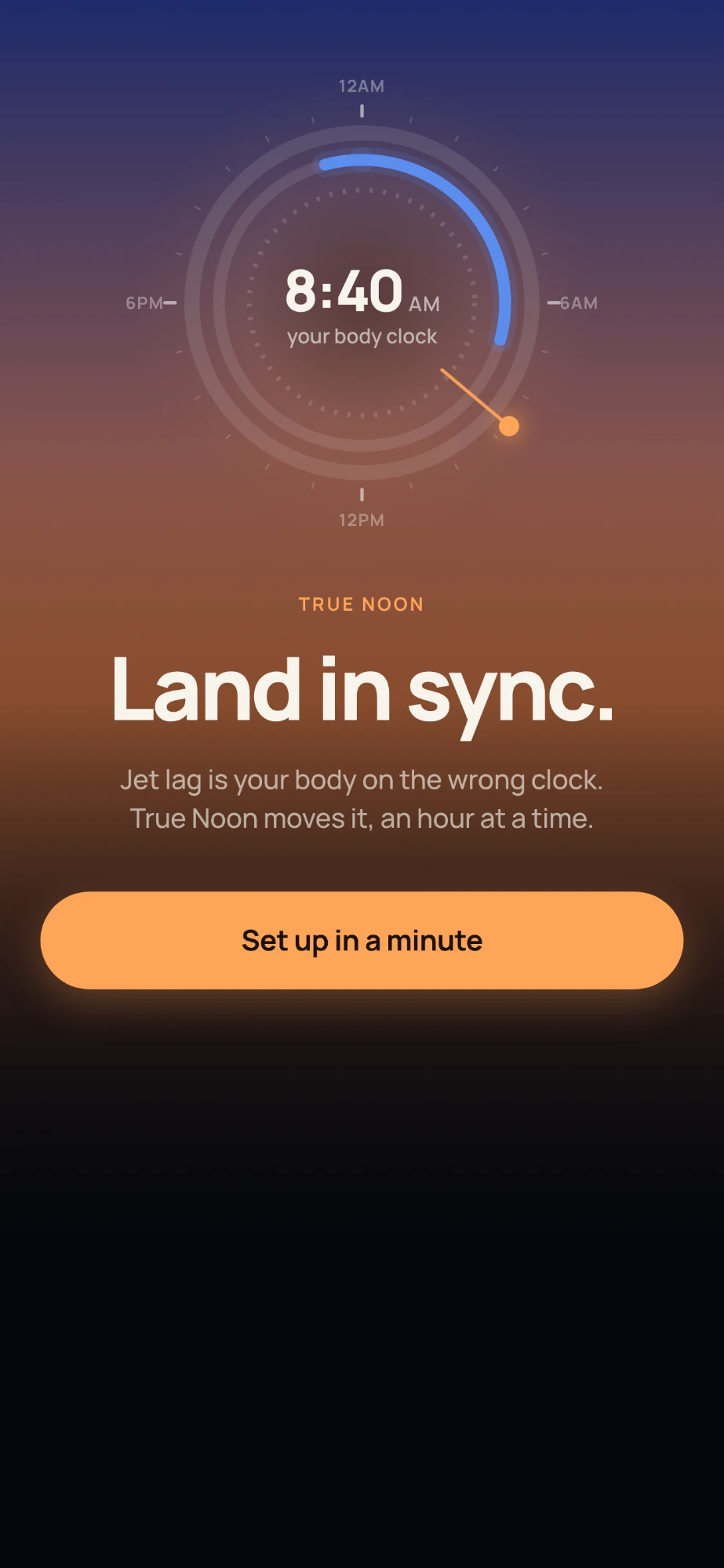
Land in sync.
Jet lag is your body on the wrong clock. True Noon moves it, an hour at a time.
In TestFlight ahead of the App Store. iPhone, free, with a one-time Pro unlock.
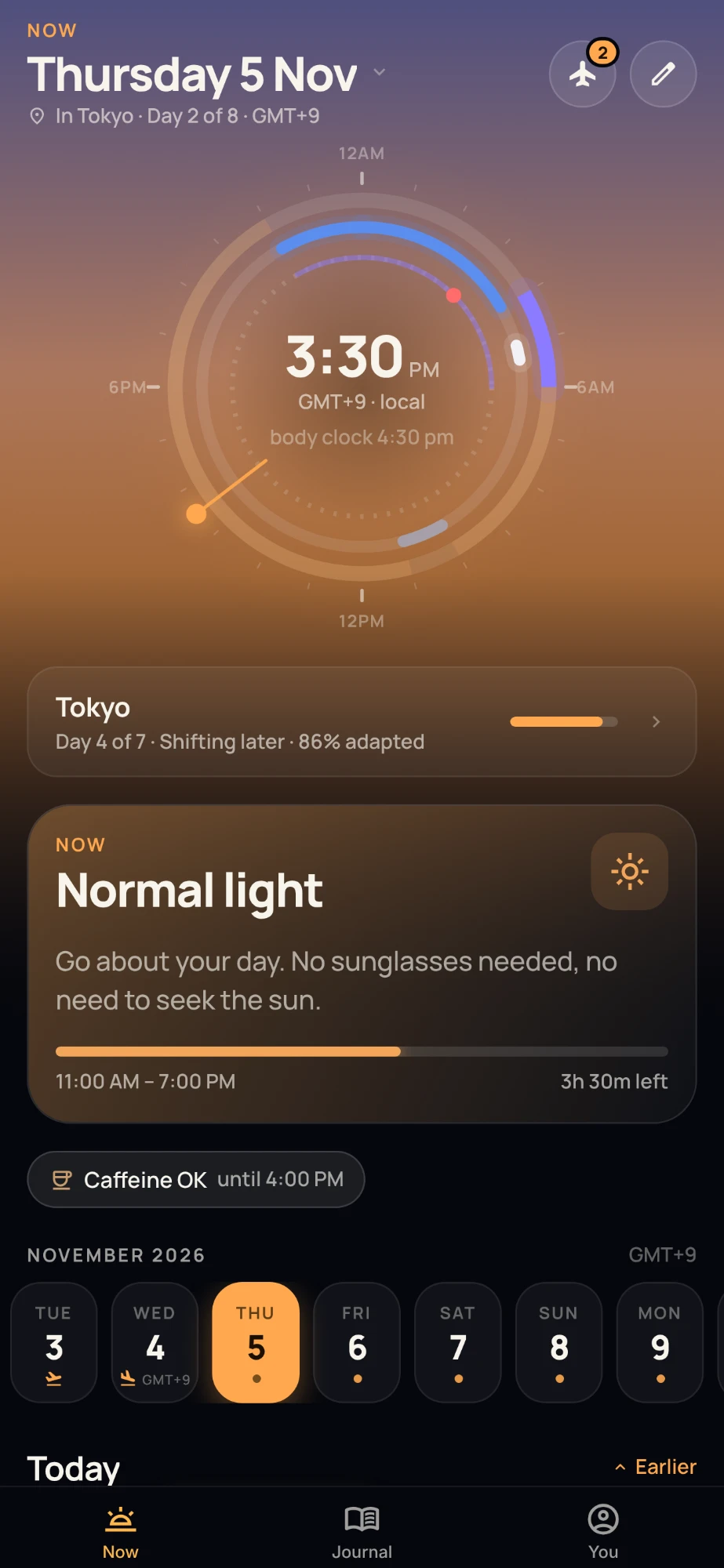
Normal light
Go about your day. No sunglasses needed, no need to seek the sun.
This is a settled day at home in your time zone, read off this browser's clock. Add a flight and every block moves to meet the destination.
Your body clock, the local clock, and what to do about the gap.
The dial shows where your clock really is. Under it, one card says what to do right now, and a timeline lays out the rest of the day, hour by hour.
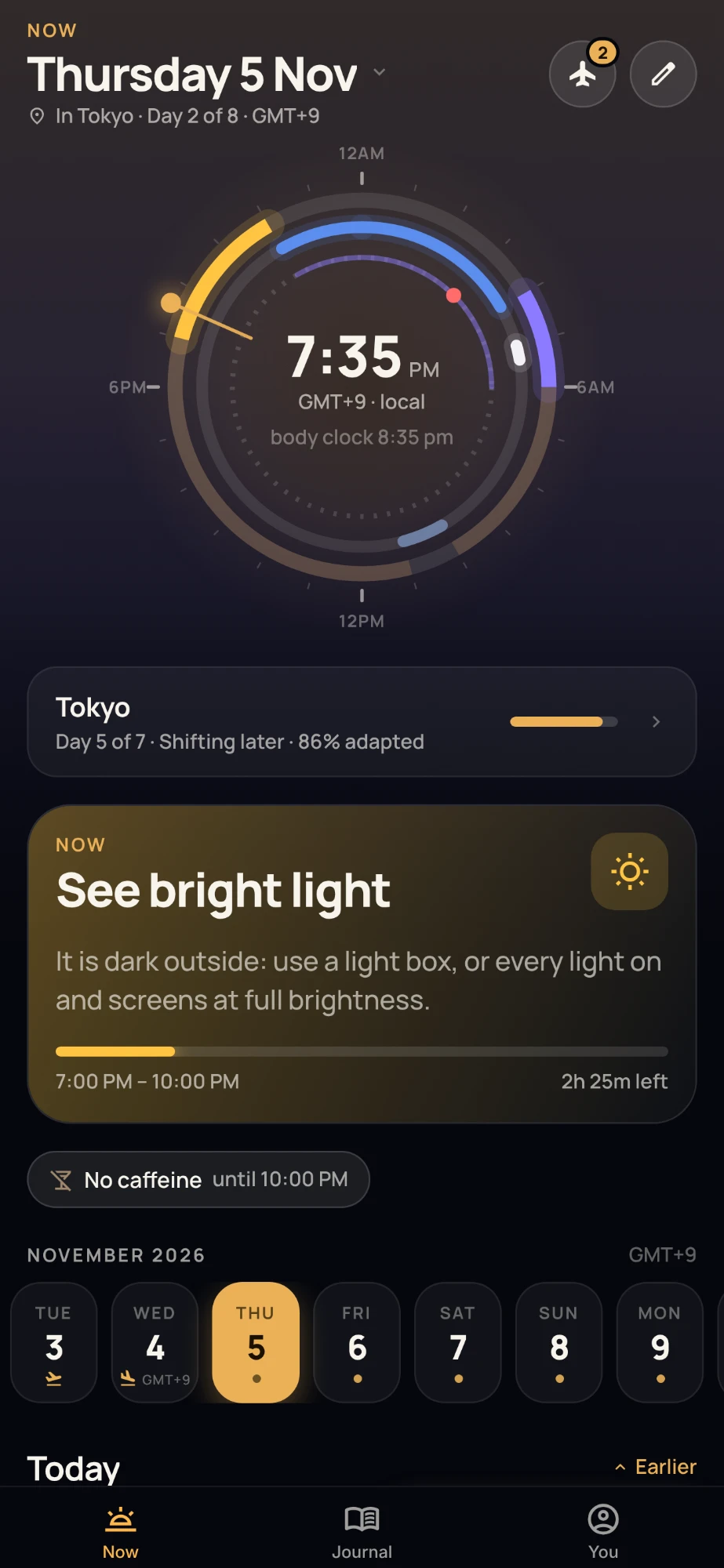
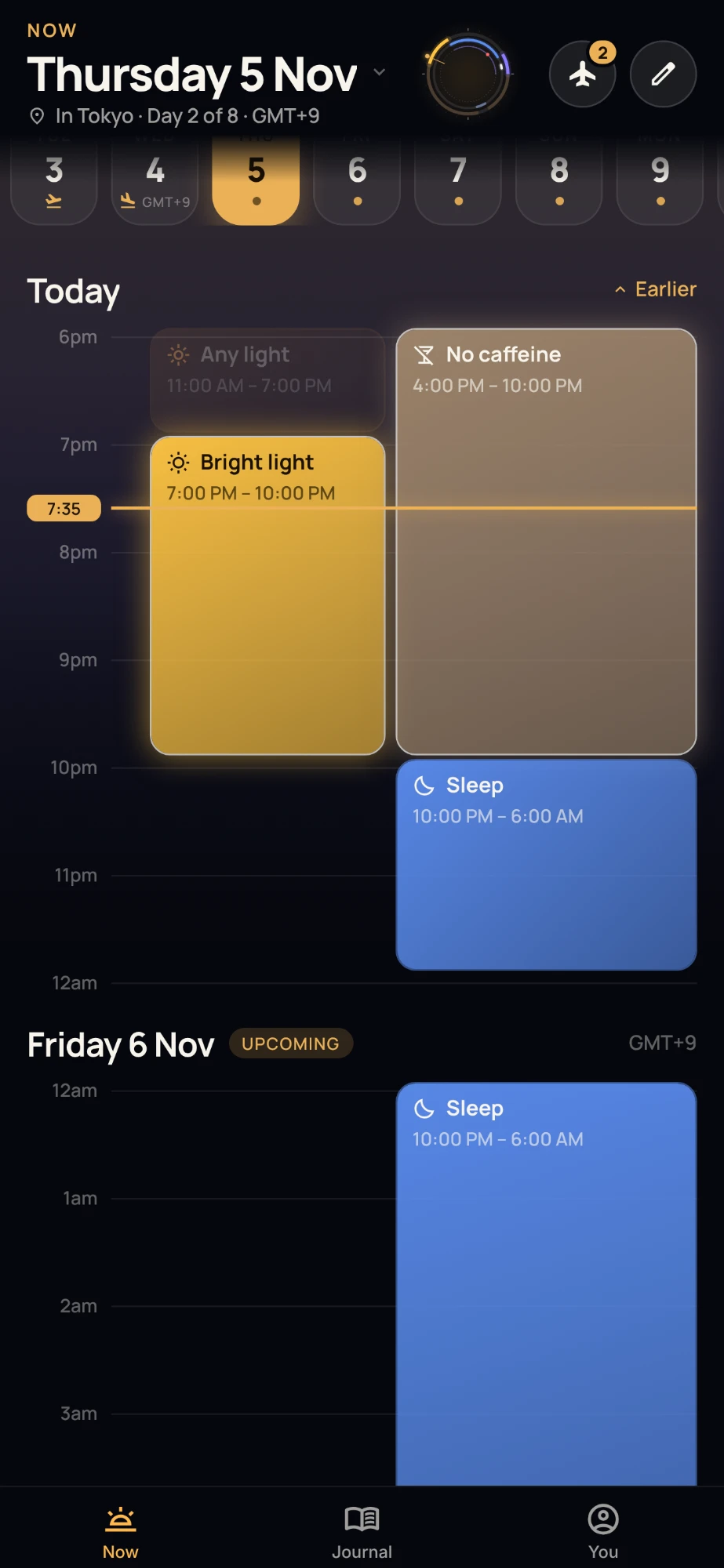
A plan for every hour.
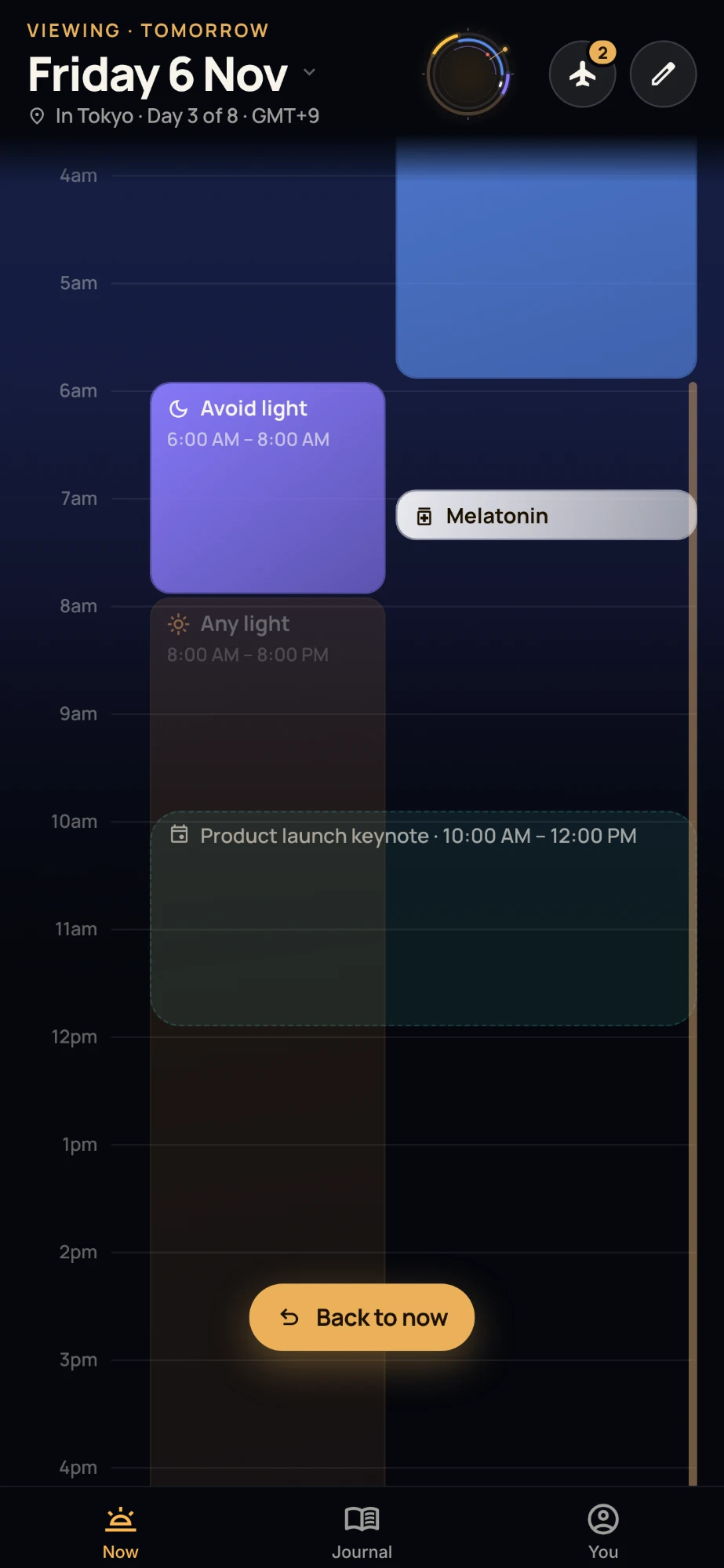
Bright light here, none there. Caffeine until four, melatonin at seven, lights out at ten. The whole day laid out as blocks against the local clock, with a line for now.
Scroll through tomorrow and the days after; the sky above the timeline turns with the hour, the way this page does.
Built around what you can't miss.
A keynote at ten, a dinner you are hosting, a flight you cannot sleep through. Tell True Noon and the plan keeps you awake for it, moving sleep and light around it instead of over it.
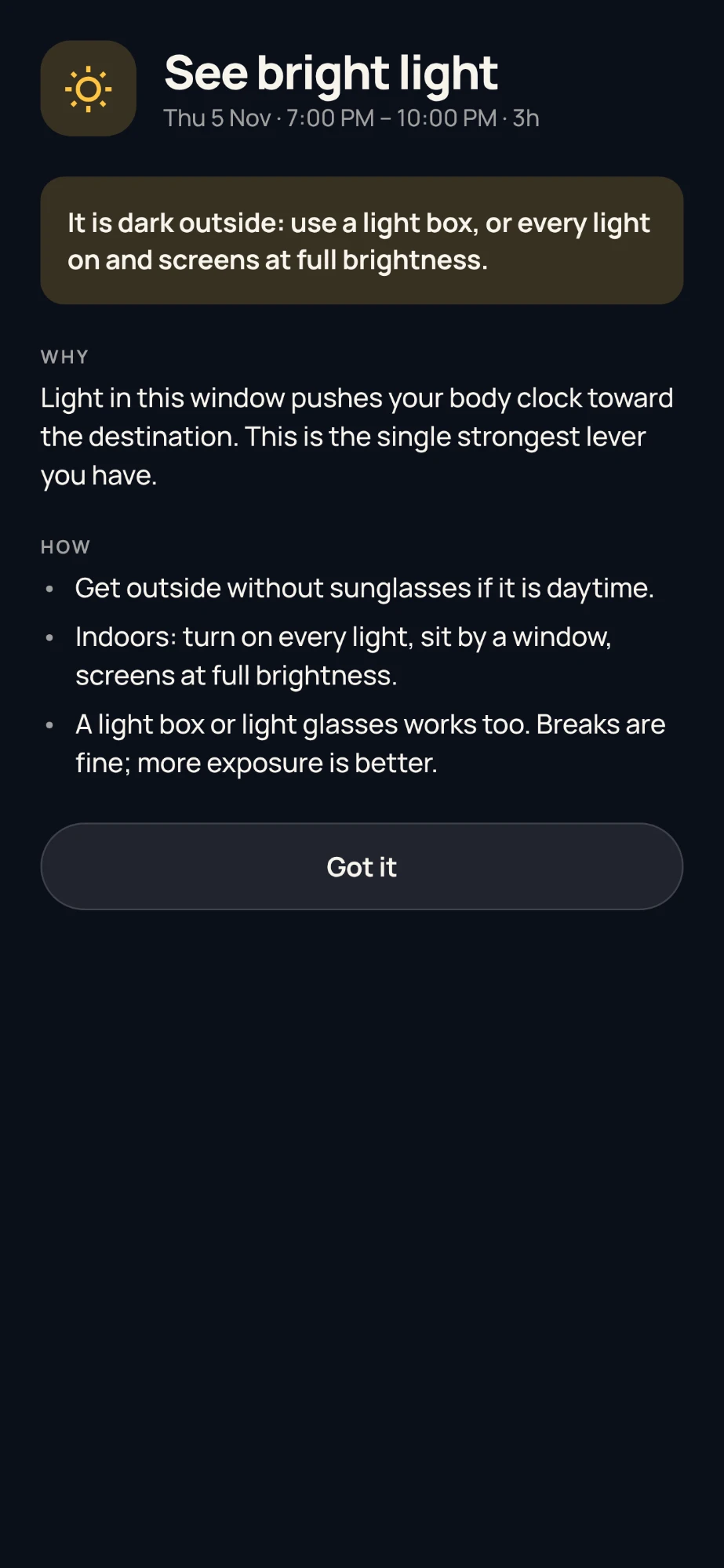
Indoors? Bright-light advice that collides with it is toned down to normal light, since you will not be outside anyway.
It adapts to what you actually did.
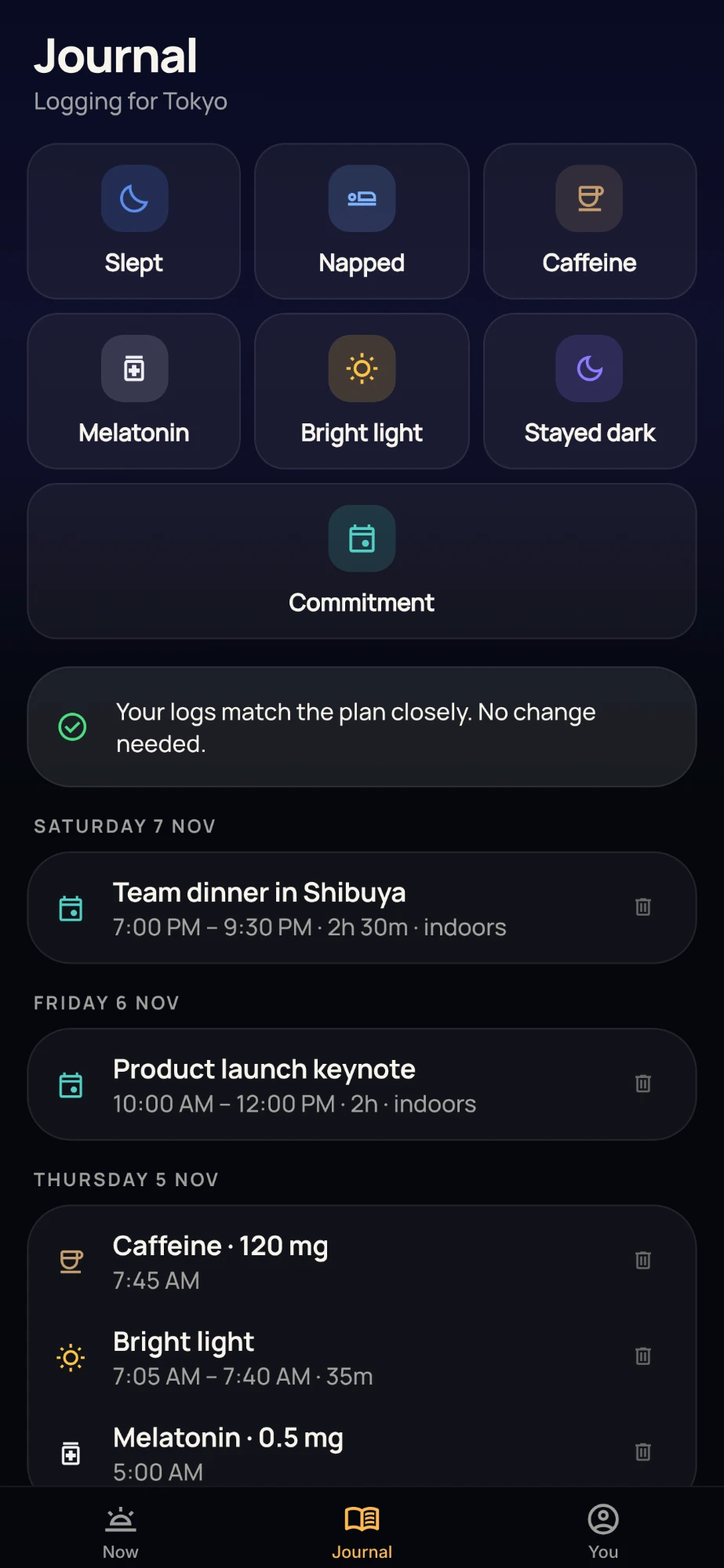
Slept through the light window? Had the coffee anyway? Log it. The plan rebuilds from where your clock really is, and tells you how much that moved it.
When your logs match the plan, it says so, and leaves it alone.
East or west, every leg has a plan.
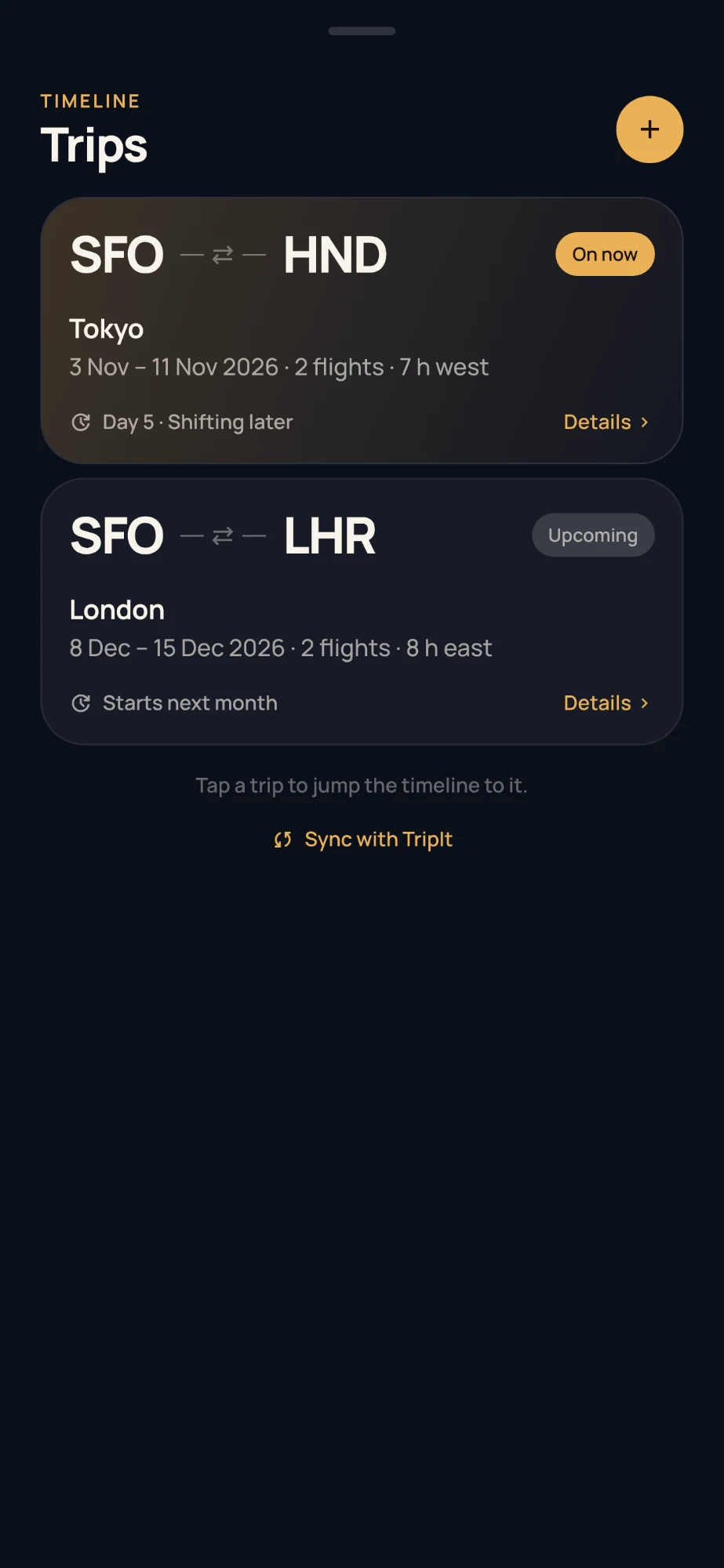
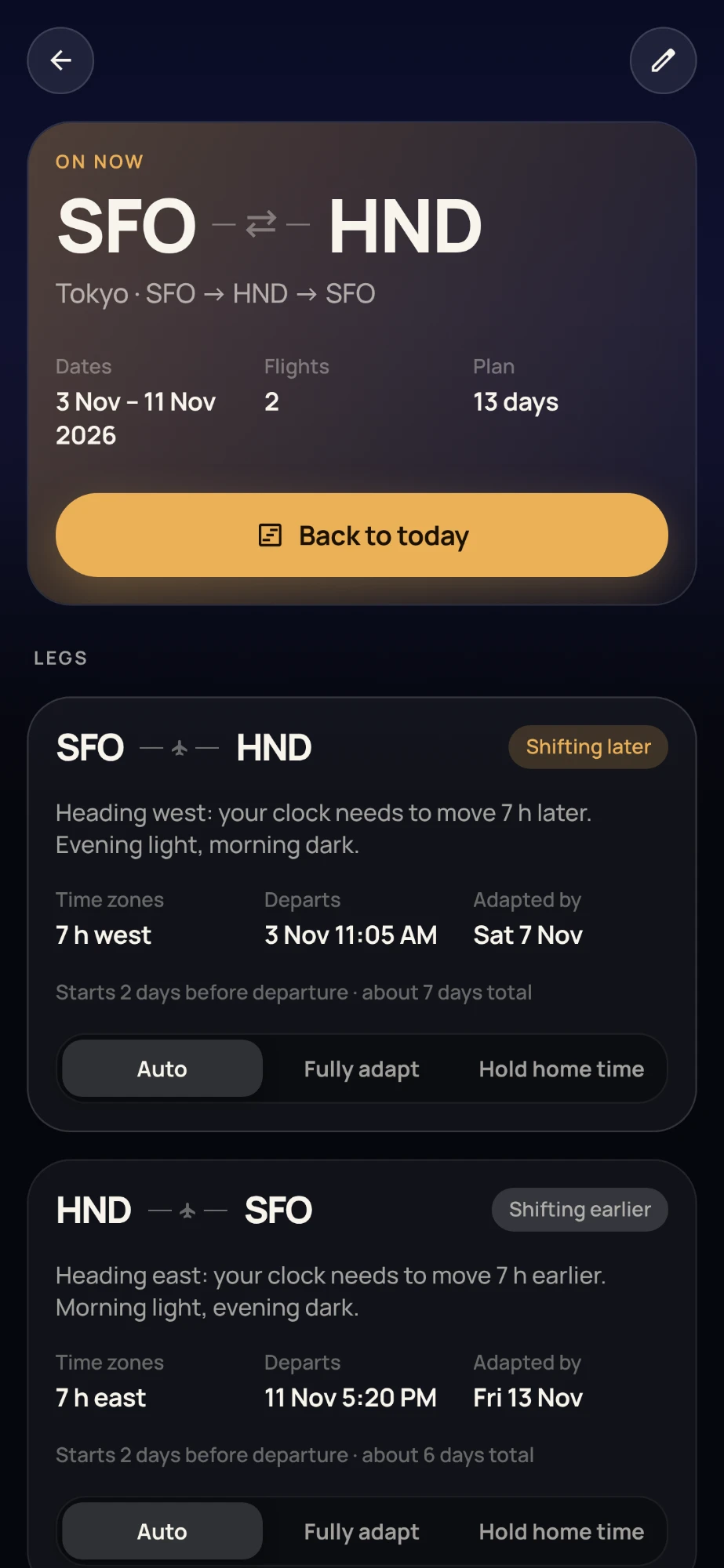
Each flight becomes a leg: how many hours your clock has to move, which way, and the day you will be adapted. Start shifting a day or two before you fly, or hold home time for a short trip.
Round trips, multi-city, back to back: they all sit on one timeline.
How this works
Every constant in the engine comes from published circadian research. The short version is in the app, under You. The shorter version is here.
Only light moves the clock
Your master clock sits in the brain and takes its cue from light hitting the eyes. Hydration, meals, cabin air and exercise affect how you feel, but they do not shift the clock. That is why every plan here is built around when to see light and when to hide from it.
The low point is the hinge
Each day your core temperature bottoms out a few hours before you would naturally wake. Light before that low point pushes your clock later; light after it pulls the clock earlier. The engine estimates your low point from your usual wake time and chronotype and moves it a bit each day toward the destination.
East is harder than west
Most people run on a clock slightly longer than 24 hours, so drifting later (westward) is easy and pulling earlier (eastward) is work. With well-timed light you can expect about 2 hours a day westward and 1.5 hours a day eastward, closer to 2 with melatonin.
Sometimes the long way is shorter
For very large eastward jumps, say 9 or more zones, advancing the clock is so slow and so easily undone by arrival light that it is faster to delay it the other way round the clock. The plan tells you when it has chosen this route.
$9.99, one-time fee.
Pay once, yours forever. No subscriptions, renewals, commitments, or any of that nonsense.
Unlimited trips
All your trips in one timeline. Add everything you have planned.
Stay on top of commitments
Meetings, dinners, shows… anything that you cannot miss, your plan builds around.
Leverage your calendar
Pull trips and commitments right from your calendar, or export your timeline as calendar events.
Sync with TripIt
Add your TripIt feed and pull all your flights automatically, so everything is waiting when you need it.
Free keeps one trip at a time, with the full plan, the journal and reminders.

Everything stays on your phone.
No account, no tracking, no cloud. Your trips, logs and profile never leave the device. The only network request the app can make is to TripIt, if you link a feed, and it goes to TripIt, not to us.
Land in sync.
In TestFlight now. iPhone, free, with a one-time Pro unlock.